

- Article
- Related
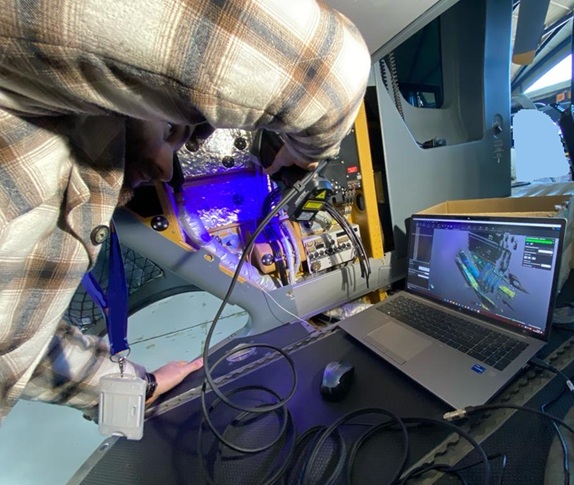
Diseñar un componente personalizado para su integración dentro de una aeronave plantea desafíos únicos cuando el espacio es limitado. Una vez instalado, el nuevo elemento debe encajar a la perfección con la geometría circundante y con el panel superior que lo cubre. Incluso la más mínima desviación dimensional podría comprometer tanto la funcionalidad como la estética del conjunto.
Desafíos:
¿Cómo integrar un componente de diseño personalizado en un entorno con espacio extremadamente limitado?
Para diseñar un nuevo componente con un ajuste perfecto, es esencial capturar con precisión la geometría del entorno, incluidas las superficies circundantes y las zonas de paso de los cables, y generar un modelo CAD preciso que sirva como base para el diseño. Este enfoque garantiza que el nuevo componente no solo cumpla con tolerancias ajustadas, sino que también encaje a la perfección una vez instalado.
¿Qué limitaciones conlleva el uso de herramientas de medición tradicionales y la adquisición manual de datos?
La adquisición manual de datos es inherentemente lenta y propensa a errores, con limitaciones evidentes tanto en precisión como en repetibilidad. En algunos casos, la complejidad geométrica o las características superficiales de las piezas hacen imposible alcanzar el nivel de precisión requerido.
¿Qué consecuencias negativas una empresa aeroespacial quisiera evitar al diseñar componentes personalizados?
La empresa podría ser incapaz de verificar ciertas tolerancias críticas, lo que podría comprometer la calidad y la funcionalidad de componentes clave. En entornos aeroespaciales, la capacidad de comparar datos de medición de piezas diseñadas con modelos CAD o especificaciones técnicas es esencial para garantizar que los componentes cumplan las tolerancias requeridas.
Además, la necesidad de generar informes técnicos detallados para demostrar la conformidad de los componentes y mantener la trazabilidad completa de los datos de medición a lo largo del ciclo de vida del producto refuerza aún más la importancia de adoptar una solución de medición más precisa.
Solución: sistemas de escaneado 3D precisos, portátiles e intuitivos
Precisión
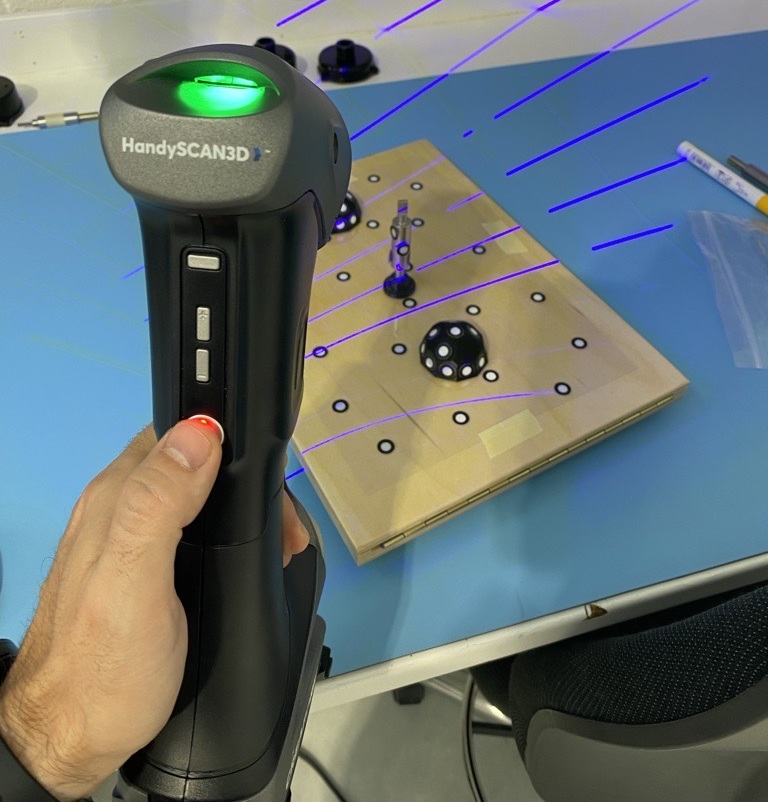
Para cumplir con los exigentes requisitos del sector aeroespacial, la solución necesita capturar mediciones 3D altamente precisas y repetibles de geometrías intrincadas y superficies complejas. Los escáneres 3D de grado profesional alcanzan este nivel de precisión de manera constante, independientemente de la calidad de la configuración de medición o del nivel de experiencia del usuario.
Portabilidad
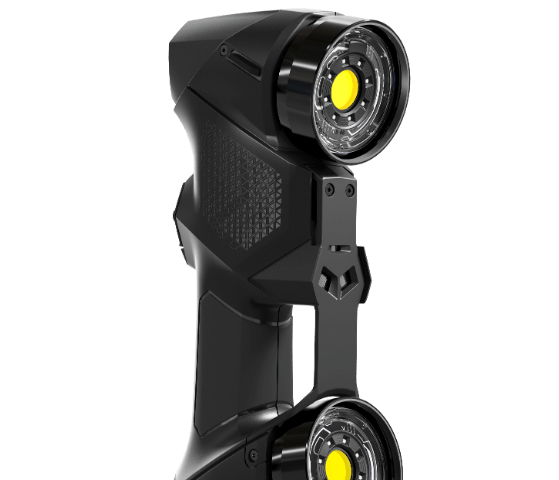
Basándose en la triangulación con reflectores ópticos para determinar su posición respecto a la pieza, los escáneres 3D manuales funcionan como dispositivos completamente autónomos, sin necesidad de trípode ni sistema de seguimiento externo. Son lo suficientemente compactos como para caber en un maletín pequeño, pueden transportarse y utilizarse fácilmente en cualquier lugar, incluso en entornos desafiantes, sin comprometer la precisión.
Facilidad de uso
Gracias a su interfaz de software intuitiva, la solución es fácil de operar y permite una rápida incorporación. Los técnicos pueden comenzar a utilizarlo eficazmente poco después de la compra y, con capacitación adicional, desbloquear gradualmente todo su potencial.
Equipado con funcionalidades tanto de bocetos en 2D como de modelado en 3D, el software permite a los ingenieros de diseño esbozar y modelar directamente sobre los datos del escaneado. Además, su transferencia paramétrica a SOLIDWORKS permite realizar ediciones de diseño sencillas y modelado basado en características, de ese modo se simplifican los diseños mediante la transferencia de modelos CAD reales y editables.
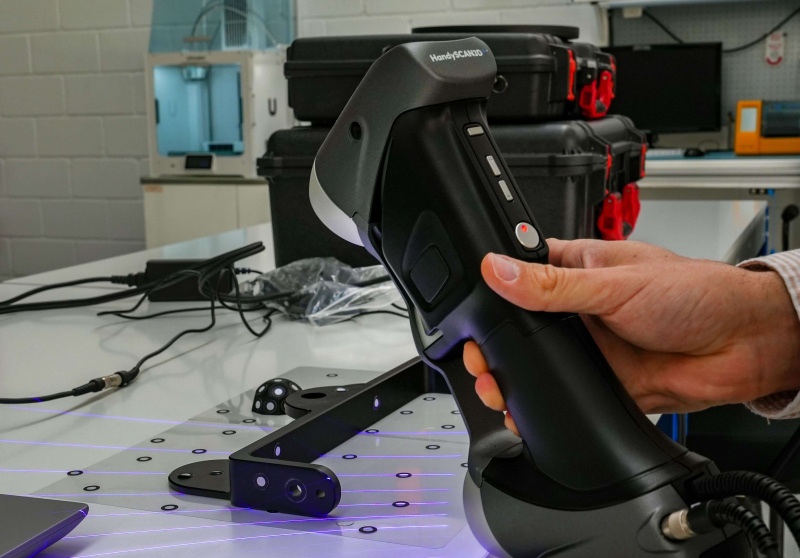
El HandySCAN 3D y el módulo de software de ingeniería inversa de Creaform, Escaneado a CAD, parte de la Creaform Metrology Suite, son ejemplos perfectos de soluciones de escaneado 3D precisas, portátiles e intuitivas.
Beneficios: mayor control y capacidades de diseño para componentes de mayor calidad
Con la adición de un escáner 3D a su kit de herramientas de medición, una empresa aeroespacial puede mejorar sus procesos de control y capacidades de diseño. La nueva solución puede reducir errores y acelerar los procesos de diseño, asegurando en última instancia componentes aeroespaciales de mejor calidad.
Inversión rentable en tiempo y dinero
Un escáner 3D de grado profesional proporciona a la empresa aeroespacial la flexibilidad para gestionar tanto tareas de diseño de modelos como de control dimensional. Disponer de una única herramienta capaz de realizar múltiples funciones representa una inversión rentable. Con solo un sistema que aprender, los usuarios pueden usar con confianza una amplia gama de aplicaciones, optimizando la capacitación y maximizando el retorno de la inversión del dispositivo.
Minimización de errores
Con el escaneado 3D, la adquisición manual de datos se elimina por completo. Las geometrías complejas y las superficies difíciles ahora pueden medirse con alta precisión. Las dimensiones resultantes sirven como una base fiable para diseñar nuevos componentes, proporcionando a los ingenieros la confianza de que cada pieza encajará perfectamente en espacios reducidos, dejando prácticamente ningún margen de error.
Mejor calidad
Con un escáner 3D, la empresa aeroespacial puede verificar con confianza tolerancias críticas que de otro modo podrían haber comprometido la calidad y la funcionalidad de componentes clave. Los datos de medición de las piezas diseñadas pueden compararse fácilmente con modelos CAD o especificaciones técnicas, garantizando que cada componente cumpla con las tolerancias requeridas.
Cliente: Europavia
Durante más de 60 años, Europavia ha suministrado repuestos, equipos y servicios de mantenimiento a las fuerzas armadas y agencias de seguridad del estado, especializándose en apoyar el ciclo de vida completo de sus sistemas.
La empresa se dedica a la gestión logística de MRO, al mantenimiento de equipos aeronáuticos y a la promoción y distribución de tecnología y sistemas avanzados en los mercados de aeronáutica, defensa, espacio e infraestructuras de España.
Mediante una estrecha colaboración con los principales fabricantes internacionales, Europavia proporciona productos tecnológicos de vanguardia que complementan los sectores nacionales aeroespacial y de defensa. Con su centro de mantenimiento certificado por la EASA, la empresa ha ampliado sus capacidades para incluir servicios de ingeniería y fabricación, ofreciendo soluciones de integración completas.
Europavia utiliza el HandySCAN 3D en soluciones para apoyar los procesos de diseño, ingeniería y mantenimiento dentro de las plataformas aeronáuticas.

¿NECESITA MÁS INFORMACIÓN SOBRE NUESTRAS SOLUCIONES?
