

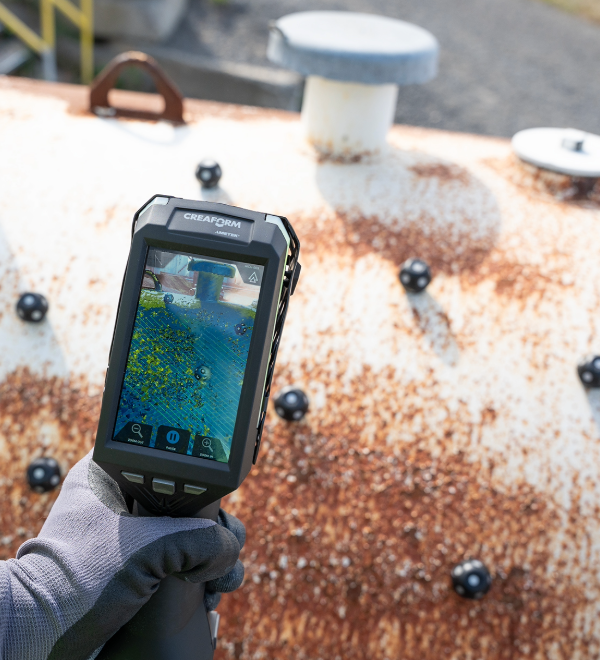

Pressure Equipment (propane sphere and pressure vessel)
Most severe accidents in refineries usually involve propane spheres, which are components at risk of exploding due to the high pressure they must sustain to maintain propane in its liquid state.
The Pressure Equipment module proposes technician-independent measuring tools to assess corrosion on spherical designs, offering powerful residual thickness export capabilities.
The Pressure Equipment module proposes technician-independent measuring tools to assess corrosion on spherical designs, offering powerful residual thickness export capabilities.
High-resolution thickness-loss measurement using a new virtual pit gauge
Accurate damage localization using the reference arrow
Fitness-for-Service – Level I & II Assessment (API 579)
Excel cells format thickness export

Calibration MFL Instruments (tank floor and roof)
As a result of their superficies, tank floors, roofs, and shells are mostly assessed with MFL equipment—in a similar way that Pipeline uses MFL Pigs in the pipeline industry.
Pressure Equipment presents accurate tools to assess external damages, such as bulge damage on cylindrical tanks. It also stands out as the in-field reference to calibrate MFL instruments.
Pressure Equipment presents accurate tools to assess external damages, such as bulge damage on cylindrical tanks. It also stands out as the in-field reference to calibrate MFL instruments.
Automatic maximum loss detection and defect dimensions
Accuracy up to 0.02 mm
Automatic damage distance evaluation to virtual reference
Automatic report generation
Which 3D scanner is right for you?
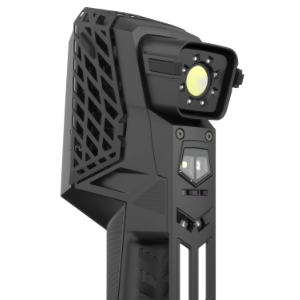

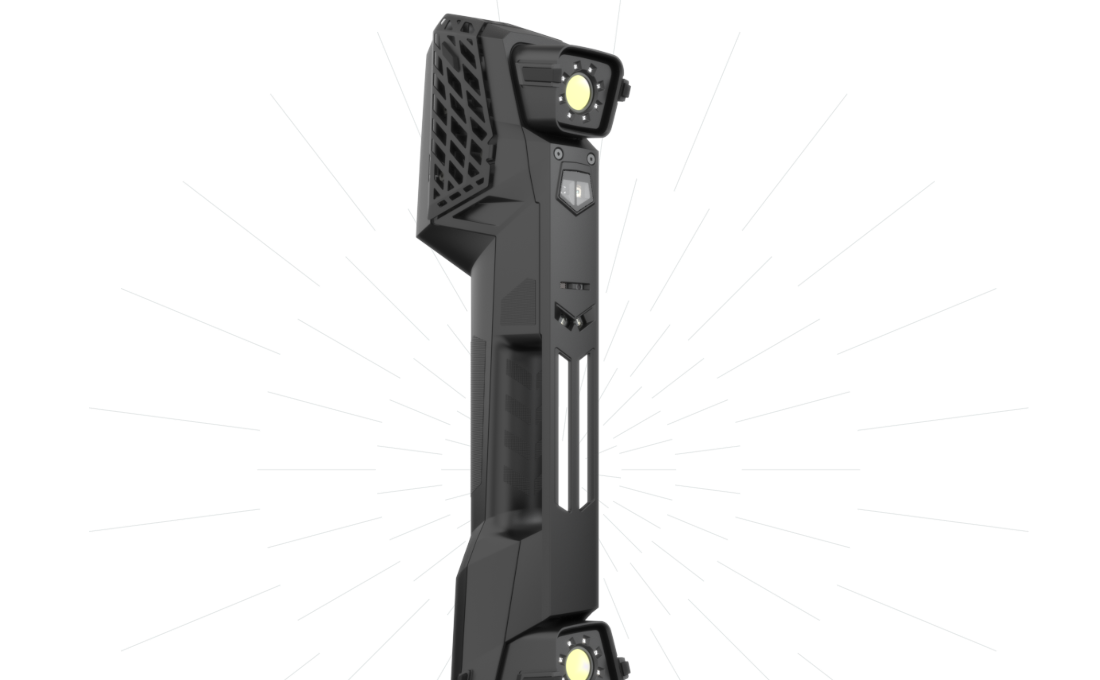
Accessories
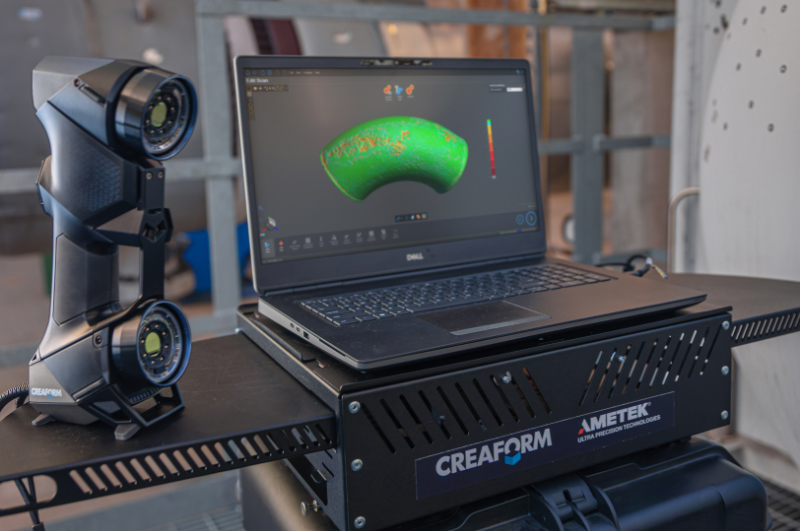
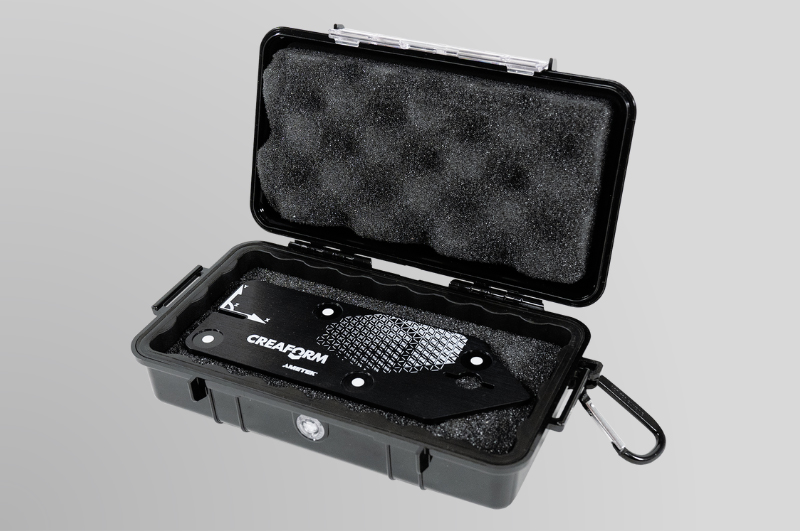
Reference arrows
No need for alignment, ready for reporting
FAQ Pressure Equipment
-
The Pressure Equipment module creates a historical record of equipment condition that can be compared across multiple inspections. This allows integrity teams to track degradation trends over time, evaluate deterioration rates, and make more informed decisions regarding maintenance, repair, or replacement planning.
-
Digital inspection records provide a traceable history of asset condition throughout its service life. This information can simplify audits, support integrity management programs, and help organizations maintain consistent inspection practices across facilities and inspection teams.
-
Because inspection results are captured in a digital format, inspectors and integrity engineers can access and review the same data collected in the field. This creates a common basis for communication, reduces interpretation errors associated with written notes or manual measurements, and helps teams make better maintenance decisions.
-
Yes. Historical inspection data can be compared to identify recurring corrosion, deformation, or other damage mechanisms. This information can help technicians investigate root causes and evaluate the effectiveness of previous maintenance actions.
-
In addition to NDT service providers, the Pressure Equipment module can provide valuable information for integrity engineers, reliability specialists, maintenance planners, refinery operators, asset managers, and engineering consultants involved in evaluating equipment condition and planning corrective actions.