

- Article
- Related

Archaeologists have the delicate task of preserving cultural heritage and furthering their knowledge about history. They need to get information about past construction methods and product usage.
In the summer of 2019, the city of Gothenburg in Sweden conducted excavation work for a big infrastructure project. During the work, three wooden shipwrecks from the 16th century were found. Since it is expensive and complicated to preserve wood when it is exposed above ground, the decision was made to digitally document everything. The archaeology team opted to use 3D scanning to scan every single piece of wood that they found in the excavation pit.
Thanks to non-contact 3D scanners, rare objects and artifacts can efficiently be scanned to create digital 3D models. The scans provide optimal quality and accuracy in order to study, restore, or duplicate objects and artefacts as well as classify them into catalogues, repositories and databases. This make it easier to share finding among research community.
In the summer of 2019, the city of Gothenburg in Sweden conducted excavation work for a big infrastructure project. During the work, three wooden shipwrecks from the 16th century were found. Since it is expensive and complicated to preserve wood when it is exposed above ground, the decision was made to digitally document everything. The archaeology team opted to use 3D scanning to scan every single piece of wood that they found in the excavation pit.
When old objects meet new technologies
Thanks to non-contact 3D scanners, rare objects and artifacts can efficiently be scanned to create digital 3D models. The scans provide optimal quality and accuracy in order to study, restore, or duplicate objects and artefacts as well as classify them into catalogues, repositories and databases. This make it easier to share finding among research community.
/OneWeb Video/P2 Video Popup/OneWeb Video Scriban(1,100) : error : Object `o_model.video_info.sitecore_video` is null. Cannot access member: o_model.video_info.sitecore_video.url
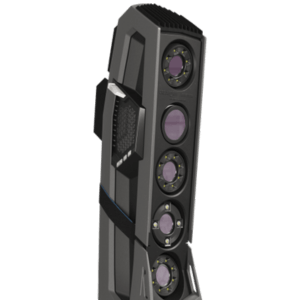
L’équipe d’archéologues chargée de l’épave a contacté MLT Maskin & Laserteknik AB, le distributeur de Creaform en Suède, afin de déterminer quel système de numérisation 3D sera le plus adéquat. L’équipe a décidé d’utiliser le scanner 3D portable Go!SCAN SPARK recommandé. L’équipe a été impressionnée par la qualité des données de ce scanner, ainsi que par sa vitesse et sa polyvalence, un avantage qui s’est révélé très important.
L’équipe d’archéologie a décidé de documenter chaque morceau de bois (environ 500) à l’aide du Go!SCAN 3D. Le projet est toujours en cours. Le résultat final sera un modèle 3D entièrement assemblé de l’épave, ce qui permettra d’apporter des réponses telles que l’endroit où le bateau a été construit, pour quelles raisons, ainsi que les trajets qu’il a effectués dans le passé.W
Regarder la vidéo
L’équipe d’archéologie a décidé de documenter chaque morceau de bois (environ 500) à l’aide du Go!SCAN 3D. Le projet est toujours en cours. Le résultat final sera un modèle 3D entièrement assemblé de l’épave, ce qui permettra d’apporter des réponses telles que l’endroit où le bateau a été construit, pour quelles raisons, ainsi que les trajets qu’il a effectués dans le passé.W
Regarder la vidéo
Produits connexes
Article written by Creafom
Published 07/07/2020
Published 07/07/2020
Recent Posts
Filters
Reset