

- Article
- Related
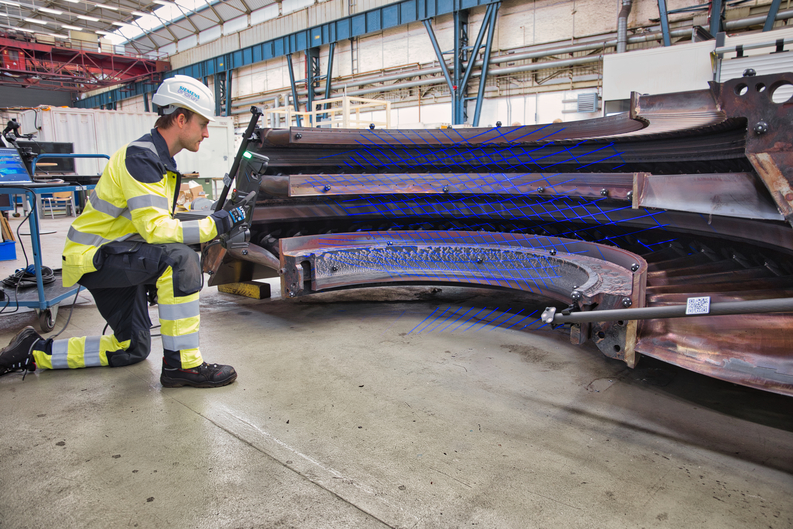
When companies must replace large broken or worn parts with new ones that match the exact dimensions and functionality, a reverse engineering process is initiated. This process often poses challenges that can become increasingly significant due to the size of the parts being replaced.
Engineers must ensure the new part fits seamlessly into its environment and optimize the design process to minimize iterations that could cause delays. This demands precise measurements and a thorough understanding of the component's attachment environment.
Consequently, product designers need all the necessary data to create their CAD model accurately and efficiently, without spending countless hours integrating this information into their CAD software.
Acquiring Rich and Complete Data
Two categories of solutions are available for acquiring data to design custom large parts.
Traditional tools, such as measuring tapes, calipers, verniers, and pictures, are preferred for simple measurements (e.g., distance between two points) and documentation. However, manually measuring components with large and complex geometries can quickly become laborious, resulting in incomplete or unreliable information.
Portable metrology devices, such as measuring arms and long-range scanners, can measure large environments, but the accuracy attained is often inadequate for achieving a perfect fit. By contrast, handheld 3D scanners accurately capture the complete dimensions of large areas and entire volumes, remaining unaffected by environmental instabilities.
MAX Series and Scan-to-CAD to Reach the Perfect Fit
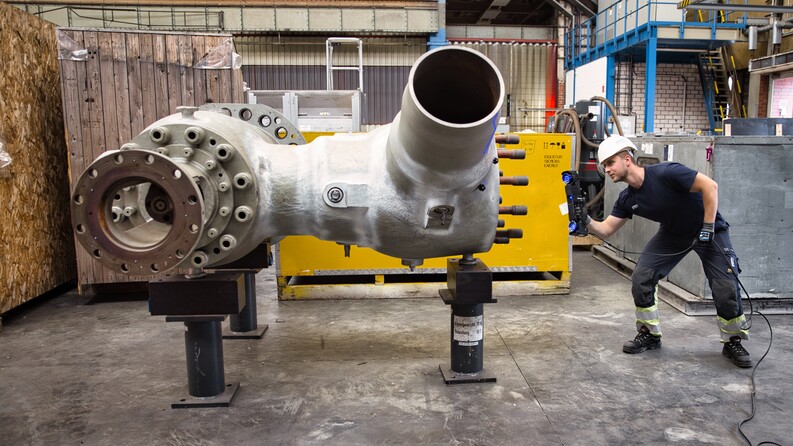
To ensure a perfect first fit, Creaform proposes the HandySCAN 3D|MAX Series, which can capture fine details and scan large volumes equally well with its Flex Volume feature.
Read more about the HandySCAN 3D|MAX Series
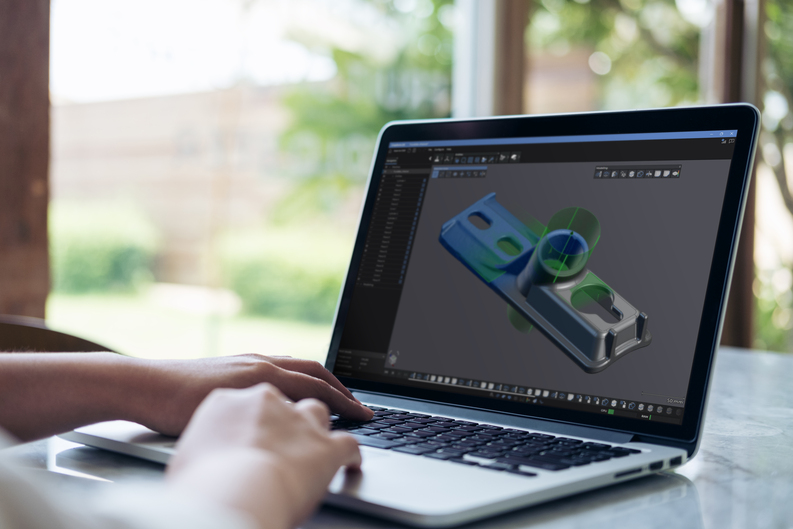
To streamline the transition from scan to CAD, Creaform developed the intuitive Scan-to-CAD software module as part of the Creaform Metrology Suite. With Scan-to-CAD, once features are extracted and aligned, all information is transferred parametrically to CAD software, allowing product designers to easily create CAD models with editable parameters, such as dimensions and constraints.
Quick Scan, Effective Scan-to-CAD Transition, and Streamlined Design Process
Unlike traditional measuring techniques, handheld 3D scanners enable the complete acquisition of design information in a single measurement session. This eliminates the need for multiple site visits to gather missing data, saving companies valuable time and resources. With the HandySCAN 3D|MAX Series capturing complete and accurate 3D scan data, product designers can easily extract and align features, as well as create parametric surfaces. Scan-to-CAD’s intuitive interface provides richer, more complete information, enabling faster transitions into CAD software to create better, more tailored, and optimized designs. By reducing the time spent on numerous iterations, product designers can accelerate the reverse engineering process. As a result, replacement parts can be seamlessly integrated with existing environments, offering a perfect fit and optimal performance.
Featured Products
Published 02/20/2025