

- Article
- Related
In the casting industry, efficiency is key to producing high-quality parts while minimizing rework, and comprehensive data plays a vital role in optimizing each manufacturing step. Traditionally, foundries have relied on conventional inspection techniques to ensure dimensional measurement, but the coordinate measuring machine (CMM) is slow to operate, generating bottlenecks and causing production delays. This is how 3D scanning technology has made its way into the industry.
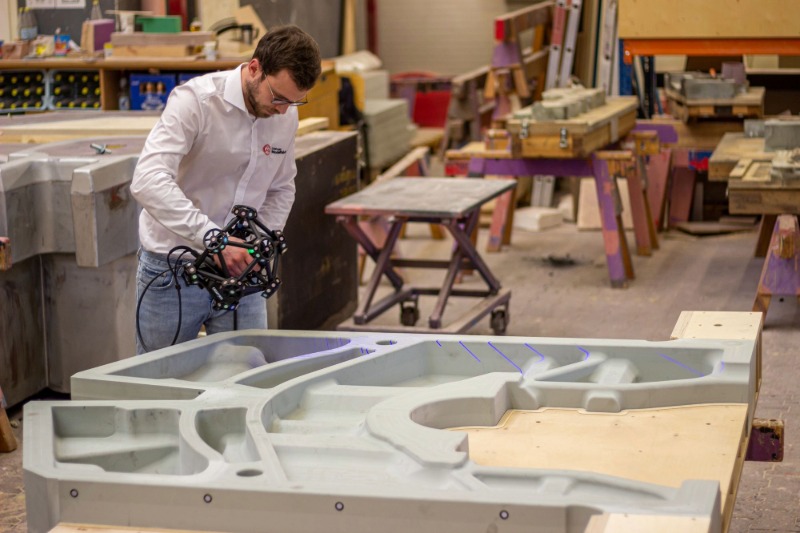
By capturing complete and accurate 3D scan data of casting surfaces at various production stages, 3D scanners enable foundries to streamline tooling validation, quality control, defect analysis, and reverse engineering. Whether for mold making, casting inspection, or wear tracking, 3D scanners are a valuable addition to a metrology kit and even an ideal replacement for the CMM.
In this article, we explore the various applications for 3D scanning within the casting industry and show how it can optimize and improve the production, inspection, and performance of castings.
3D Scanning at Every Stage of Casting Manufacturing
Pattern, Tooling and Mold Making
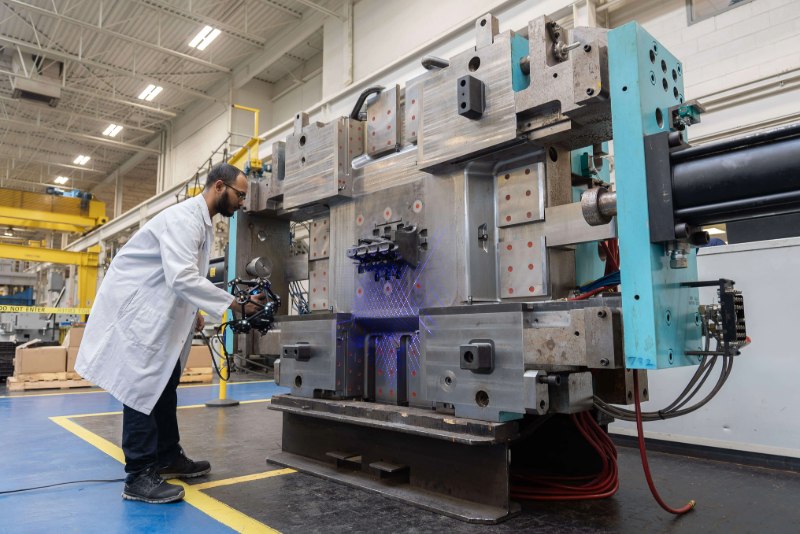
The casting manufacturing process begins with pattern, tooling, and mold making. By measuring molds and dies with a handheld 3D scanner, technicians can verify conformance to the design requirements and tolerances, ensuring accurate dimensions from the start. If modifications are needed, 3D scanning precisely identifies where adjustments should be made. Read how (Duisburger Modellfabrik GmbH uses the Creaform MetraSCAN 3D Scanner to compare 3D scan data and CAD models on large castings.)
3D scanners are also the ideal tool for measuring hard-to-reach cavity features and verifying their compliance with CAD models. Visual inspections of complex cavities often miss details. As for the CMM, it only measures small areas of the cavity, leaving a lot of uncertainty about what lies between those individual measurement points. The probe’s length and ruby size may also prevent access to deep ribs and areas beside long core pins. Moreover, matching the measurement results of these traditional techniques with the CAD is far from easy. (Read how EXCO Engineering recognized the limitations of CMMs in measuring critical cavity features and opted for Creaform 3D scanning technology.)
With 3D scanning, foundries can easily identify shrinkage or distortion in casting parts or wax patterns and detect deviations in shape or dimensions. By analyzing these discrepancies, they can determine where adjustments are needed and refine mold designs to compensate for material contraction or deformation, ensuring consistent part quality.
Applications for Pattern, Tooling and Mold Making
- Dimensional Validation – Ensure molds and dies match design and tolerances
- Tooling Verification – Ensure feature cavities match CAD models
- Shrinkage & Distortion Compensation – Measure shrinkage in cast parts (or wax patterns) and adjust molds for accuracy
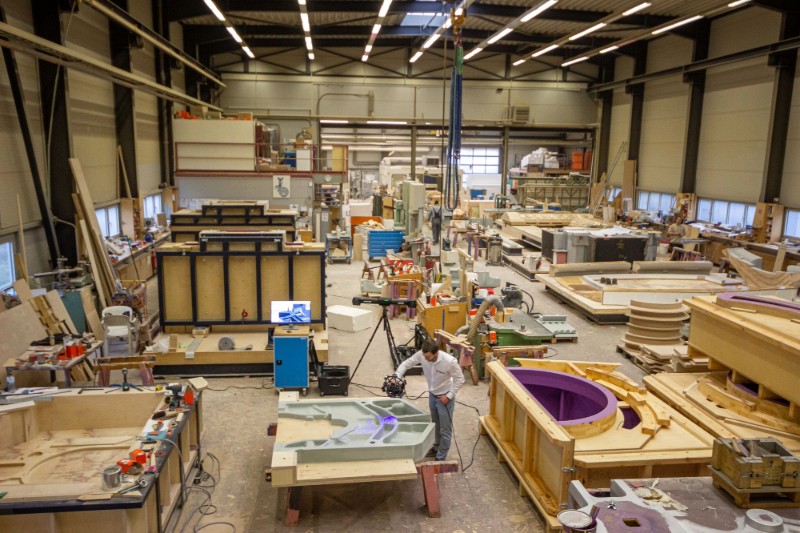
Prototype Verification, First Article Inspection and Quality Control
Once prototypes have been verified, 3D scanners are a key asset to complement CMMs during first article inspection (FAI) and quality control (QC).
Because 3D scanning captures comprehensive data of entire casting surfaces, it easily detects defects such as porosity, warping, and cooling-related imperfections before they compromise performance or structural integrity. Porosity weakens the material, potentially causing leaks or machining issues, while warping affects fit and assembly. Cooling-related defects can lead to shrinkage, cracks, or brittleness, reducing durability and fatigue resistance. By identifying these issues early with 3D scanning, foundries ensure casting parts meet quality requirements and avoid costly rework.
3D scanning is also an effective method for verifying the proper fit and alignment of cores, inserts, pulls, and slides, ensuring seamless component integration. Clear, visual colormaps enable precise part-to-CAD comparisons to quickly identify deviations from the original design, preventing time-consuming remanufacturing.
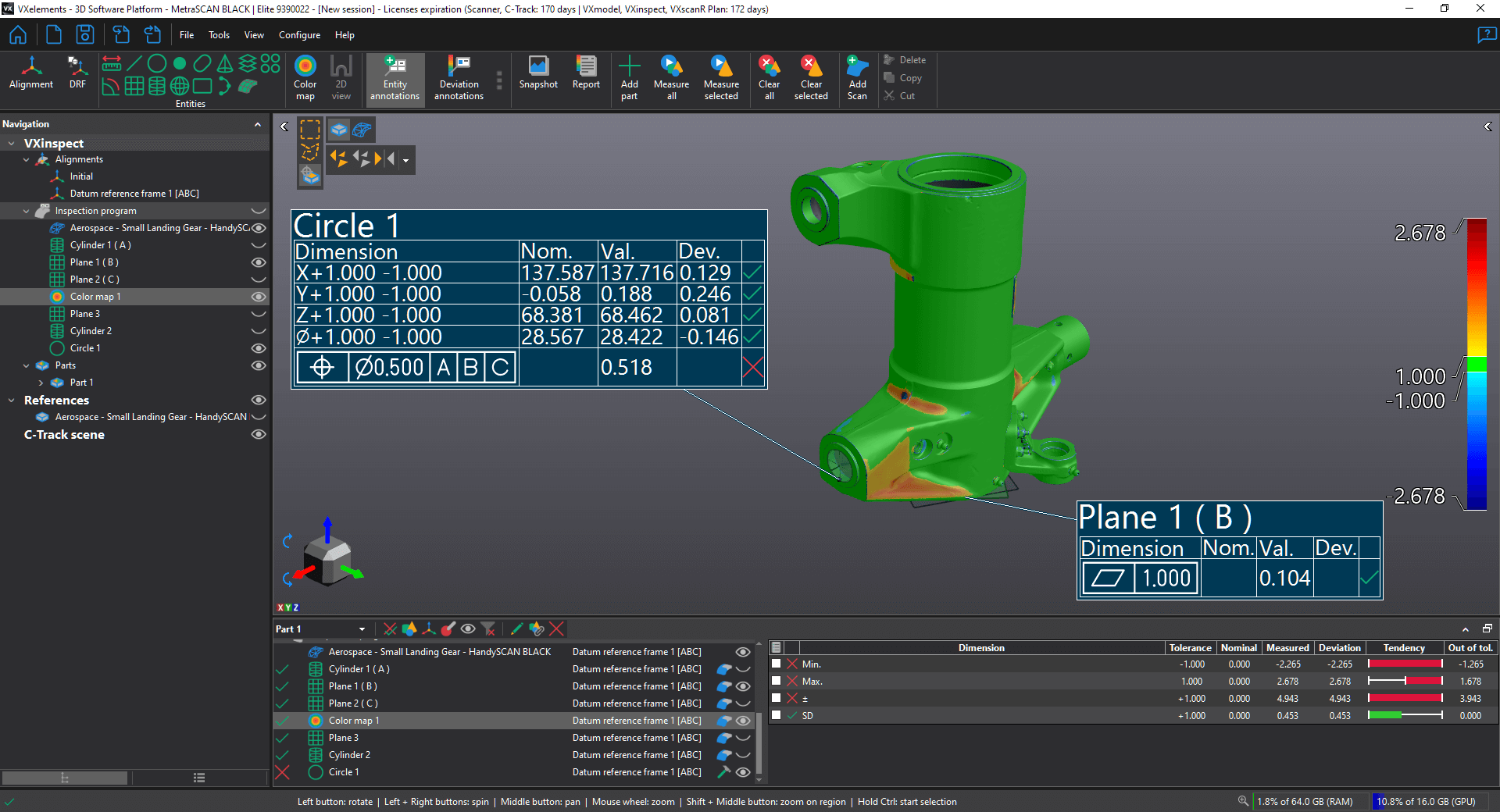
Finally, 3D scanners streamline the Production Part Approval Process (PPAP) with automatic report generation, ensuring compliance with tolerances and accelerating approval cycles.
Applications for Prototype Verification, First Article Inspection and Quality Control
- Casting Defect Detection – Identify porosity, warping, or defects caused by cooling
- Cores, Inserts, Pulls & Slides – Ensure proper fit and alignment
- Part-to-CAD Comparison – Scan cast parts to detect deviations from the original design
- Production Part Approval Process (PPAP) automatic report generation
Casting Performance and Optimization
Once the tooling is developed and the first castings are produced and inspected, the next step is to optimize the manufacturing process for consistent quality and efficiency. By combining speed with accuracy, 3D scanning plays a crucial role in refining key production controls and enhancing casting performance.
By capturing 3D scan data at various stages of production, foundries can identify out-of-tolerance castings early, preventing them from advancing through the process only to fail quality control later. Production can be adjusted, and castings can be reworked immediately, minimizing defects and reducing scrap rates. With detailed records at each stage, tracing and addressing systemic issues becomes easier. By integrating 3D scanning into regular inspections, foundries can continuously refine casting techniques and enhance overall manufacturing processes.
Similarly, frequent and detailed 3D scans of the runner, sprue, and gating system provide valuable insights into molten metal distribution, helping engineers optimize flow channels for better material utilization. 3D scanning also enables precise thermal distortion analysis, detecting mold expansion or contraction caused by temperature fluctuations to ensure dimensional stability.
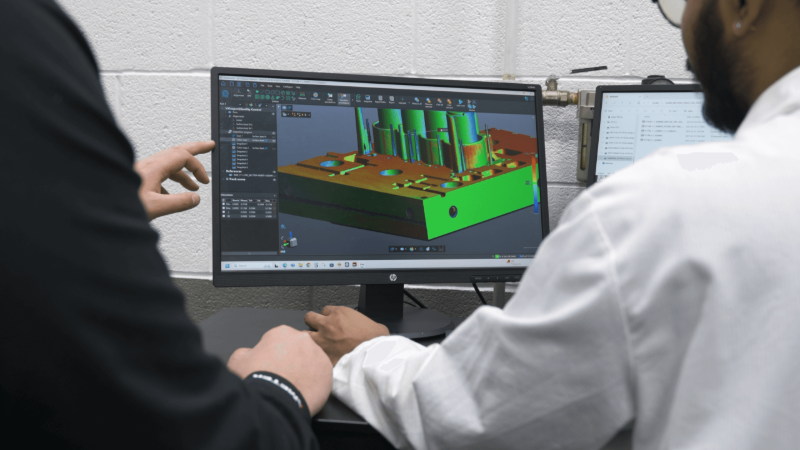
Moreover, because 3D scanners capture the entire casting geometry in just a few minutes, they enable rapid and accurate part validation, which contributes to reducing cycle times. Incorporating a 3D scanner into a metrology kit, therefore, accelerates casting production while maintaining high part quality.
Finally, 3D scanning helps ensure proper casting alignment and verify that material quantity and thickness are adequate before machining. While machining fixtures can calculate machine coordinates for optimal alignment, these jigs are costly and require a specific model for each casting type.
Using a 3D scanner (handheld or automated) significantly improves the process. It starts with scanning the part—typically already done for quality control—and then using a custom macro to align the CAD model within the casting, thereby optimizing its position. The software then generates the reference alignment points needed for the CNC machine. As a result, the CNC machine can align the casting accurately, ensuring optimal balance and consistent material thickness.
Applications for Casting Performance and Optimization
- Process Improvement – Use scan data to refine casting techniques and reduce scrap rates
- Runner, Sprue & Gating System Analysis – Scan flow channels to improve molten metal distribution
- Thermal Distortion Analysis – Detect expansion or contraction of molds due to temperature changes
- Cycle Time Reduction – Optimize casting production by quickly validating part accuracy
- Casting Alignment – Verify that material thickness is optimal before machining
Failure Analysis and Wear Tracking
Next, 3D scanning is a reliable method to integrate into failure analysis workflows to extend tooling lifespan, resolve technical issues, and prevent costly defects.
Over time, repeated use can cause cracks, warping, or surface wear, which 3D scanning can quickly detect to assess mold degradation. By capturing high-resolution surface data and comparing it to the mold’s original 3D model, foundries can identify subtle changes such as material loss, surface defects, or deformations. When this data is measured regularly, quality control teams can plan targeted maintenance, preventing defects in casting production and extending the mold’s lifespan.
Colormaps are also an ideal tool for comparing failed castings to their original design specifications, helping quality assurance pinpoint defects and clearly identify their root causes, whether due to material inconsistencies, improper casting conditions, or operational stress.
Additionally, 3D scanning’s comprehensive data enables long-term wear and deformation analysis of molds, ensuring early detection of gradual warping or surface degradation. This allows quality control to perform timely maintenance or proactively replace molds.
(Read why GF Casting Solutions upgraded from its previous measuring solution to Creaform 3D scanning technology.)
Applications for Failure Analysis and Wear Tracking
- Crack & Wear Detection – Identify stress fractures or excessive wear in cast parts
- Root Cause Analysis – Compare failed parts against design specs to diagnose defects
- Wear & Deformation Analysis – Detect warping or surface wear in molds over time
Reverse Engineering
In addition to enhancing the casting manufacturing process, 3D scanning can be used wisely for reverse engineering, enabling engineers to recreate accurate digital 3D models and improve existing designs.
3D scanning enables industrial companies like German construction equipment manufacturer BOMAG GmbH to digitize legacy parts and recreate CAD models of old or discontinued components. This allows them to maintain or reproduce critical parts that are no longer available.
3D scanning’s high resolution and accuracy can also be leveraged for competitive benchmarking to analyze competitor components and provide valuable insights into design dimensions and performance for comparison and potential improvement.
For custom manufacturing, 3D scanning facilitates the modification and enhancement of existing designs, allowing for quick adaptations and optimizations tailored to specific needs. Additionally, mold archiving involves creating digital copies of molds and preserving detailed representations of tooling for long-term storage, which ensures easier access for future reproductions or modifications.
Applications for Reverse Engineering
- Legacy Part Digitization – Recreate CAD models for old or discontinued parts
- Competitive Benchmarking – Analyze competitor components
- Custom Manufacturing – Modify and improve existing designs
- Mold Archiving – Create a digital copy of a mold for archiving
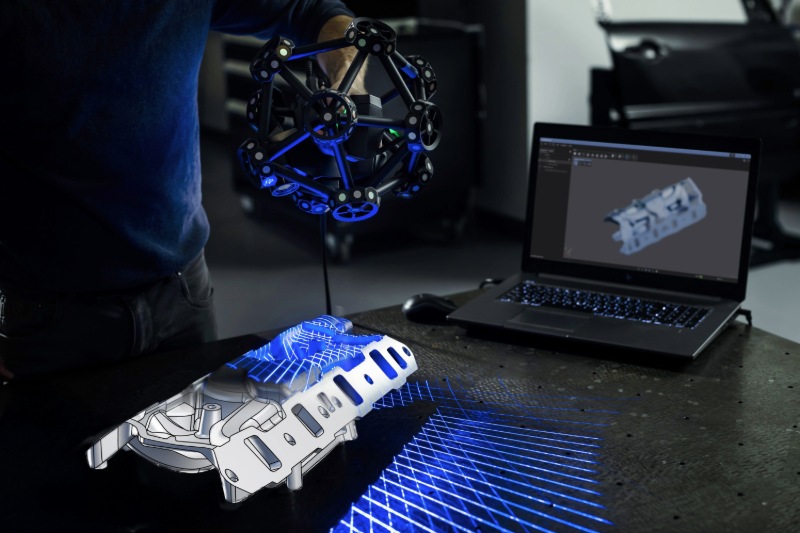
Top 5 Reasons to Use 3D Scanning in Casting Manufacturing
- Fast 3D Scanning for Rapid Quality Control
3D scanners with multiple laser crosses acquire data at a higher measurement rate than any other technique, allowing foundries to reduce inspection time from hours to minutes. With Creaform 3D scanning solutions, meshes are automatically generated, streamlining the workflow from scan to usable data. Read more about (EXCO Engineering’s experience in cutting inspection time in half with the MetraSCAN 3D.)
- Comprehensive Data for Complete Surface and Geometry Analysis
Unlike probing, the technology primarily used on CMMs and measuring arms, 3D scanning captures entire surface profiles rather than discrete points. This results in more complete, accurate, and reliable inspections. Clear visual colormaps of entire geometries make deformations easy to identify, enhancing analysis, report sharing, and cross-department collaboration.
- Intuitive Software Accessible to All Users
3D scanners are known to be easy to use, as simple as manual spray painting. Paired with intuitive software solutions like Creaform.OS and the Creaform Metrology Suite, they are accessible to all users, regardless of their level of expertise or experience. They are simple to learn for shop-floor operators who can quickly and easily master various shapes, complex parts, and difficult surfaces—all with the same device.
- Portable 3D Scanners That Bring Metrology to Casting Production
With 3D scanning, operators have the flexibility to leave the metrology lab and scan directly on the production floor. Thanks to the optical tracker that enables dynamic referencing, Creaform 3D scanners are engineered to maintain part alignment and ensure measurement accuracy, even in shop-floor conditions. This efficiency gain allows for additional intermediate checks, improving manufacturing and casting quality.
- Inspection of Large and Complex Castings Without Moving Them
Measuring large castings (1m+) with measuring arms or white light technology requires multiple setups, while CMMs must be massive. The HandySCAN3D|MAX Series, however, is engineered to capture fine details and scan large volumes equally well, delivering high-resolution 3D scans of large parts in just minutes. Read why (Siemens Energy abandoned conventional tools and chose the HandySCAN 3D|MAX Series for measuring large and complex parts like turbine blades, rotors, and castings.)
3D Scanners: More Than Just Measuring Tools
From accelerating first article inspections to ensuring tighter tolerances in final casting validation, 3D scanning has become a game-changing technology for the casting industry. By significantly reducing inspection time and improving casting quality, foundries can streamline their processes, catch defects early, and minimize costly rework.
Beyond inspection, the versatility of 3D scanning extends across the entire manufacturing process—whether for tooling validation, reverse engineering, or process optimization—making it a high-value investment with a high return. With so many applications across the industry, 3D scanners are far more than simple measuring tools; they are valuable assets transforming the casting industry for greater efficiency, accuracy, and competitiveness.
Published 04/29/2025