

- Article
- Related
Millenia before American actors’ Tom Cruise and Anthony Edwards first uttered their oft-quoted line from the 1980s aviator classic Top Gun, humans, it seems, have always had “a need for speed.”
From an evolutionary perspective, this makes perfect sense. Compared to the animal kingdom, we are not a particularly fast species. And when the odds of dinner running away from you are high, chances are you’re motivated to mitigate these biological shortcomings. First, with faster domesticated animals. Then, in time, with even faster machines that can do a whole lot more than chase errant food.
Enter the Hydrofoil: A Watercraft Crossed with an Airplane
One of those machines is a particular type of watercraft, the hydrofoil. Whether powered by sails or engines, these boats use submerged wings attached beneath the hull—known as foils—which, once a certain speed is reached, generate lift that raises the hull out of the water.
This approach has critical advantages, namely speed. By eliminating friction between the hull and the water, drag is significantly reduced and speed radically increased. It also enables a smoother, more energy efficient experience, not unlike a mag-lev train and its ability to “float” above the tracks.
Hydrofoil, or Hydroptère in French, is also the proper noun of a specific vessel built on this technology.
First put to sea in 1994, L'Hydroptère is the brainchild of designers/developers’ Éric Tabarly, and Alain Thébault and built by a consortium of major French industries. Known as the first sailboat to break the almost mythical 50-knot barrier, the so-called “Concorde of the seas,” has made global headlines for decades and is very much the pride and joy of the French people and a legendary foiling trimaran.
Breaking Records, Re-Built for 2026 and Beyond
Recently, the team at L'Hydroptère 2.0, founded in 2019 after saving the famed ship from abandonment at a Hawaiian port, undertook a complete restoration to breathe new life into this historic vessel.

To achieve this incredible feat, the Nantes-headquartered company investigated 3D laser measurement technology solutions that would allow them to measure parts with high precision, keep costs low, while reducing the risk of rework, waste and scrap.
“L’Hydroptère is a masterpiece of engineering at the intersection of aeronautics and the marine industry, she is the fastest sailing vessel in the world at sea and we are renovating her to make her ‘fly’ again and to carry out activities of general interest. She will also become a multi‑domain research and development platform.”
-Gabriel Terrasse, L’Hydroptère 2.0 CEO.
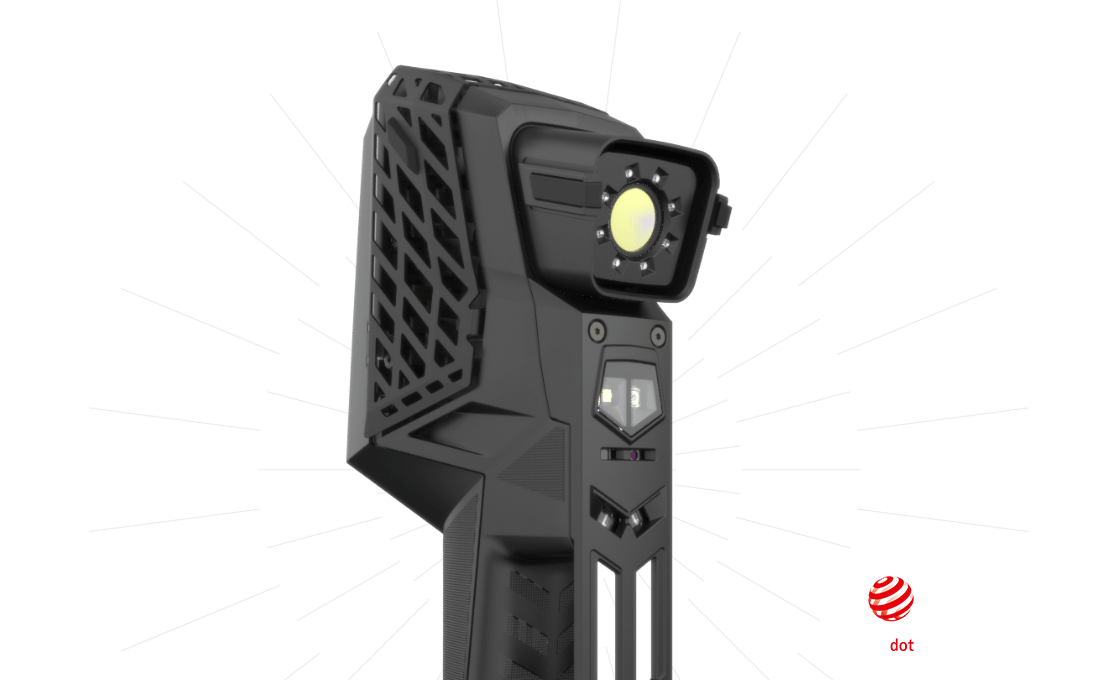
Ultimately, the team opted for the FARO CREAFORM HandySCAN 3D EVO Series, a line of metrology-grade handheld 3D scanners ideal for industrial inspection, reverse engineering, and quality control tasks.
To preserve the vessel’s performance, L’Hydroptère 2.0 engineers needed to replace an aluminum fitting subjected to loads exceeding 50 tonnes with a titanium model. The new part was manufactured by Alloy Additive, a Turkish company specializing in metal additive manufacturing for the aerospace industry. To machine and install it properly, it was essential to create an accurate 3D scan of the existing components.
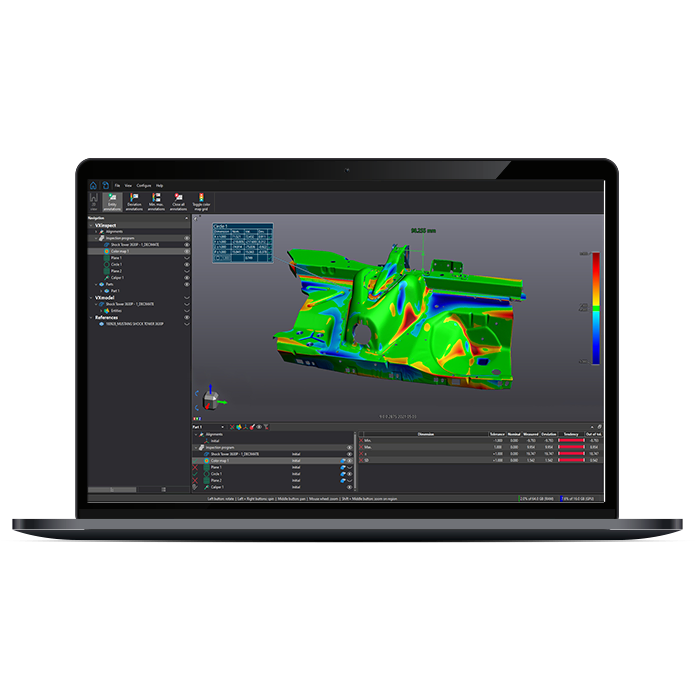
Fortunately, HandySCAN 3D proved itself to be a fast and flexible solution, capable of being used on-site, in real time, without having to send the part away. Data retrieval was equally seamless and all with the required accuracy to create a machining program.
“A solution like the HandySCAN 3D that’s this fast, this flexible, and this accurate isn’t easy to find!”
-Gabriel Terrasse, L’Hydroptère 2.0 CEO.
A Look Under the “Hull:” What is a Titanium Fitting?
Titanium fittings are structural components specifically designed to connect, support, or reinforce various structural parts of the Hydroptère. They ensure the transfer of loads and stresses between the various components.
The original fitting was made of 7175 aerospace-grade aluminum, which is lightweight but less capable of handling extreme forces over time. Because this particular component was subjected to loads exceeding 50 tonnes, engineers needed a stronger and more durable material to maintain safety and performance.
Titanium was chosen because it offers an exceptional strength-to-weight ratio, meaning it is significantly stronger than aluminum while still relatively lightweight. It also performs better under repeated stress, resisting fatigue and deformation.
Custom-shaped, the part had to be tailored to fit precisely within an existing assembly, serving as a critical load-bearing connection. HandySCAN 3D enabled engineers to ensure the geometry would be carefully constructed to match the surrounding structure and distribute forces efficiently.
By replacing the aluminum fitting with a titanium version while employing the HandySCAN 3D system, engineers improved the durability and reliability of the entire seacraft, ensuring it could withstand the intense loads without failure.

3D Laser Scanning and the Marine Industry
Beyond this particular project and the Hydroptère, 3D laser scanning has become a critical metrology and reverse-engineering tool in the marine industry at large, particularly for sailboats and hull development where geometric accuracy directly influences hydrodynamic performance.
For sailboat applications, hull geometry is a primary determinant of resistance, lift, and overall efficiency through the water. Subtle deviations in curvature or symmetry can introduce drag or negatively affect balance and handling characteristics. By acquiring a precise digital replica of a hull, naval architects can perform detailed shape analysis, compare as-built geometry against design intent, and quantify deviations down to sub-millimeter tolerances.
Beyond design validation, 3D scanning also plays a critical role in refit, repair, and modification workflows. Many existing vessels, especially legacy or custom builds like the Hydroptère, lack comprehensive original digital documentation.
While this level of across-the-board scanning was beyond the immediate needs of L'Hydroptère 2.0 for this portion of the restoration project, it’s important insight into what’s possible and what might be needed in the decades ahead if L'Hydroptère expects to remain seaworthy, breaking new speed records along the way.
A New Horizon for L’Hydroptère
And for a company like L'Hydroptère 2.0, it’s fitting, perhaps, that their work is based in France – home to some of the world’s earliest depictions of speed and motion via prehistoric cave art.
For the talented men and women at L'Hydroptère 2.0, helping rebuild the Hydrofoil is less about work and more about completing a labor of seafaring love.
“The renovation of L’Hydroptère requires a level of precision on par with that of the aerospace industry. Thanks to tools like those from FARO CREAFORM, we know we will be able to meet those requirements,”
-Terrasse
“The service provided by FARO CREAFORM is fast, efficient, and extremely precise. And that’s exactly what’s needed when working on a speed record-breaking sailboat that travels at over 100 km/h. The renovation of the Hydroptère, an iconic symbol of maritime and technological success, is nearing completion. The Hydroptère will soon be able to take flight once again—not to chase records, but to carry out missions of public interest focused on education, innovation, and the environment. And, most importantly, it will once again inspire and spark the imagination of people of all ages!”
RELATED PRODUCTS
Published 08/27/2026